Chelsea has a mix of residents, independent businesses, established retailers, restaurants, cultural venues and visitors. From the shops and cafés around King’s Road to businesses near Sloane Square and the streets leading towards the River Thames, organisations often need practical ways to communicate with people who live, work and spend time in the area.
Community engagement is not simply about advertising a business. It can involve informing residents about an event, encouraging people to support a local project, promoting a new service, collecting feedback or helping people understand changes taking place in their neighbourhood.
For businesses and organisations in Chelsea, combining face-to-face activity with clear printed communication can make local campaigns easier to notice and understand. Printing services in Chelsea can support this work through flyers, posters, leaflets, banners and other materials designed for specific local purposes.
Understand the Different Audiences in Chelsea
A community campaign works better when it is planned for the people who are likely to see it. Chelsea is not made up of one type of audience. A campaign may need to reach long-term residents, families, local workers, shoppers, students, visitors or people attending events.
King’s Road, for example, has a strong retail and hospitality presence. Communication used in this area may need to be short and easy to understand because people are often walking between shops, restaurants and other businesses. Posters displayed in suitable locations can introduce an event or campaign quickly, while smaller flyers can provide dates, contact details and further information.
Residential parts of Chelsea may require a different approach. Leaflet printing can be useful for community notices, local services, consultations, fundraising activities and neighbourhood events where people need more information than a poster can provide.
The main point is to decide who needs the information before choosing how to present it.
Use Local Events to Build Community Connections
Chelsea has several well-known places that bring people into the area. The Royal Hospital Chelsea is closely associated with the neighbourhood, while the annual RHS Chelsea Flower Show brings considerable attention to this part of London. Saatchi Gallery at Duke of York Square also contributes to the area’s cultural activity.
Businesses do not have to be directly involved with a major event to benefit from increased local activity. Restaurants, cafés, retailers and service businesses can prepare relevant information for customers when more people are spending time nearby.
Printed materials can also support smaller activities such as workshops, charity events, school activities, exhibitions and community meetings. Poster printing can help announce an event, while flyer printing provides a simple way to share details with people nearby.
For events held inside a venue, banners and signs can help visitors find entrances, registration points or different activity areas. Clear information is particularly important when an event attracts people who are unfamiliar with the location.
Make Printed Information Easy to Notice
People in Chelsea see a large amount of information every day. A community message therefore needs to be clear rather than complicated.
A poster should normally communicate the main point quickly. The event or campaign name, date, location and action required should be easy to find. Trying to place too much information on one poster can make the message difficult to follow.
Leaflets and booklets allow more space. They can explain the purpose of a local initiative, provide schedules, show maps or list ways residents can take part. Booklet printing may be suitable for programmes, community guides and projects where several pages of information are needed.
Large format printing can support campaigns that need to be seen from a greater distance. Banners, display boards and larger posters can be useful at community venues, exhibitions and organised outdoor activities where permitted.
The format should always match the amount of information being communicated.
Work With Other Chelsea Businesses and Organisations
Local engagement does not always need to be handled by one organisation. Working with nearby businesses, community groups and venues can help information reach a wider audience.
A retailer on or near King’s Road might display information about a neighbourhood event. A café could make flyers available at its counter. Event organisers may work with local businesses to distribute programmes or notices.
Business card printing can also support networking between local organisations. Staff attending meetings, exhibitions or community activities can provide direct contact information without asking people to remember names, websites or telephone numbers.
Brochure printing may be useful where several services or organisations are being introduced together. A local business group, for example, could use a brochure to explain participating services and provide useful contact details.
These simple partnerships can help campaigns become part of normal local activity rather than relying on a single advertising channel.
Connect Street-Level Promotion With Digital Communication
Printed and digital communication can work together. A person may first notice a poster near a shop, station or community venue and later visit a website for more information.
Chelsea is served by public transport including Sloane Square station, and nearby transport connections bring workers and visitors into the area throughout the day. Businesses planning local promotion should consider how people move through the neighbourhood and where information can be displayed legally and appropriately.
Flyers and posters can include a short website address or QR code leading to event registration, booking information or a campaign page. This gives printed material a simple purpose: attracting attention locally and directing interested people towards the next step.
Social media can then provide updates, while physical materials continue to reach people who may not follow the organisation online.
Prepare Materials Around Local Timings
Timing matters when promoting community activities. Printing hundreds of flyers after an event has already gained attention is less useful than having the right materials available before people need them.
Organisations should plan backwards from the event or campaign date. Posters may need to be displayed in advance, while programmes and directional signs may only be required on the day.
There are also situations where plans change at short notice. An updated event time, additional session or last-minute community activity may create an urgent printing requirement. Same day printing can help Chelsea organisations deal with these situations when materials are needed quickly.
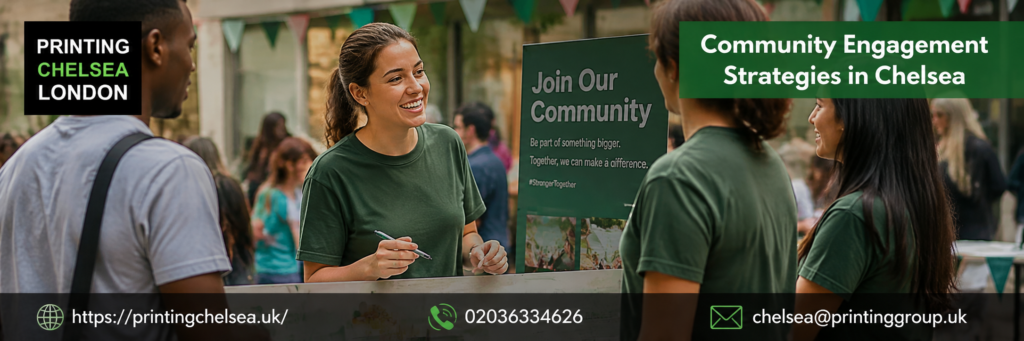
T shirt printing or workwear printing may also have a practical role at organised events. Matching printed clothing can help visitors identify staff, volunteers or event teams, particularly at busy public activities.
The aim should be to order what is needed for a clear purpose rather than producing unnecessary material.
Conclusion
Community engagement in Chelsea depends on understanding the people an organisation wants to reach and communicating with them in a clear way. The neighbourhood includes busy shopping streets, residential areas, cultural venues, hospitality businesses and well-known events, so there is no single method that suits every campaign.
Local businesses and organisations can use posters, flyers, leaflets, booklets, banners and other printed materials alongside websites, social media and direct conversations. Choosing the right format, location and timing can help residents and visitors understand what is happening and how they can take part.
For printing chelsea, supporting community activity means providing practical printed materials that fit the purpose of each campaign, from a small neighbourhood notice to signage and information for a larger local event.